The Foundation
Data Foundations vs. The Big Software Purchase
Why the most capital-efficient investment is not a software license.
There is a pattern that plays out in almost every growing business. Things start to break — reports do not match, the board pack takes too long, nobody trusts the numbers. The response, almost universally, is to buy something: a new CRM, a BI platform, an AI product. It feels decisive. It feels like progress. And it almost always underdelivers.
The Two Approaches, Side by Side
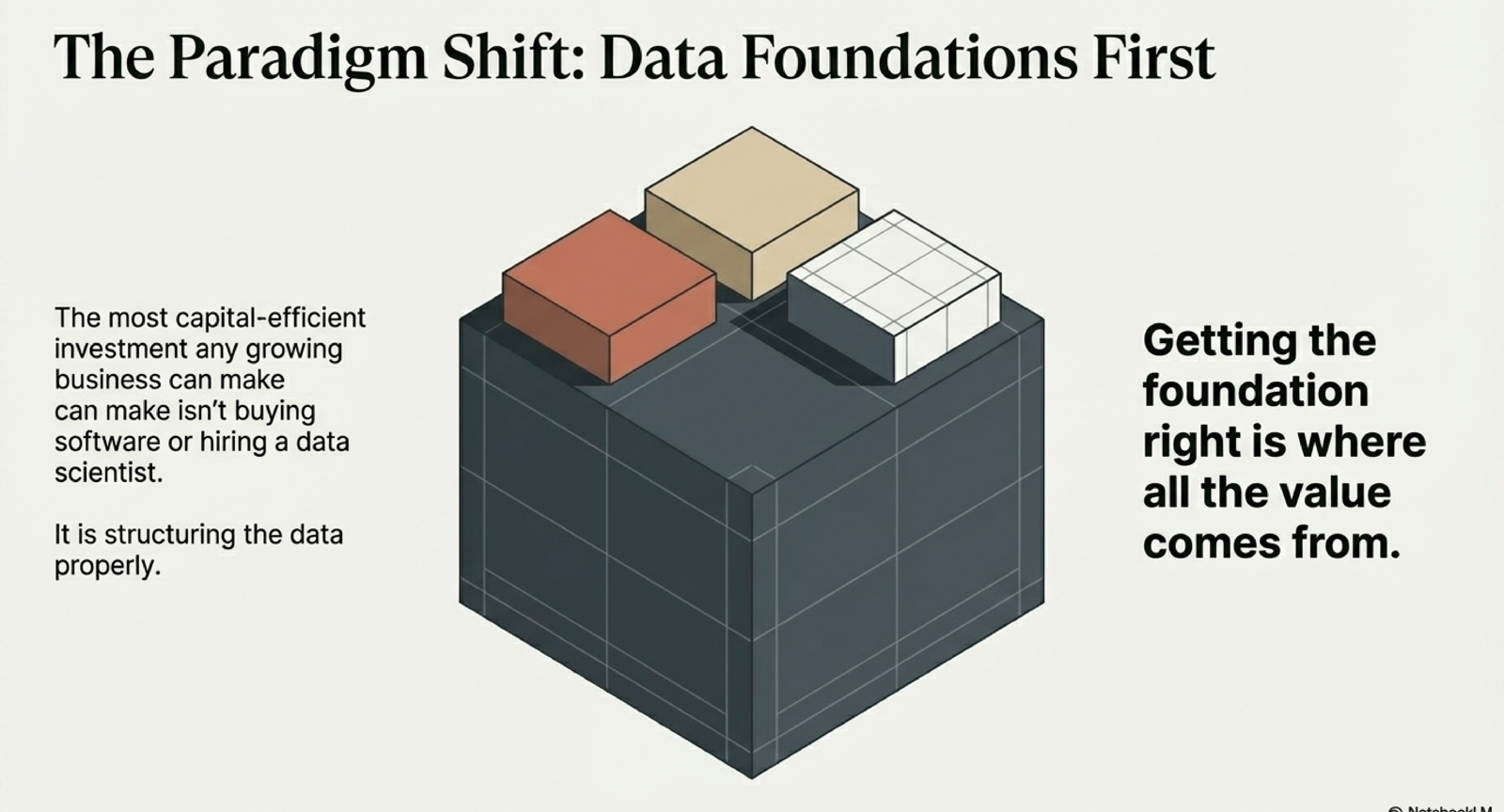
The software-first approach: you buy a tool, connect it to your existing systems, and hope it creates clarity. The result is usually a new dashboard that looks impressive but pulls from the same inconsistent data. Within months, trust erodes. The tool gets blamed. The cycle repeats with the next vendor. The foundation-first approach: you connect your systems, normalise your data, and build a single source of truth. Then you layer tools on top. The result is that every tool works better, every report is trustworthy, and every future capability — from forecasting to AI — becomes possible without starting from scratch.
One approach compounds in value. The other compounds in complexity.
The Capital Efficiency Argument
A BI platform license might cost $50-200K per year. A CRM implementation can run into the hundreds of thousands. An AI project on top of broken data will cost six figures and deliver nothing actionable. A data foundation for a business with 5-15 operational systems typically costs a fraction of a single software purchase — and it makes every subsequent technology investment more effective. It is not about spending less. It is about spending in the right sequence.
$12.9M
Average annual cost of poor data quality per organisation
Gartner, 2021
What You Get With a Foundation
With a data foundation in place, software implementations take weeks instead of months because the data is already structured. New hires ramp up faster because there is a single source of truth to learn from, not fifteen spreadsheets. Leadership gets answers in seconds instead of days. And when the board asks for numbers, you have them — instantly, reliably, without heroic manual effort. Research from Gartner shows that poor data quality costs organisations an average of $12.9 million per year1 — the foundation eliminates this cost at the source.
The De-Risking Effect
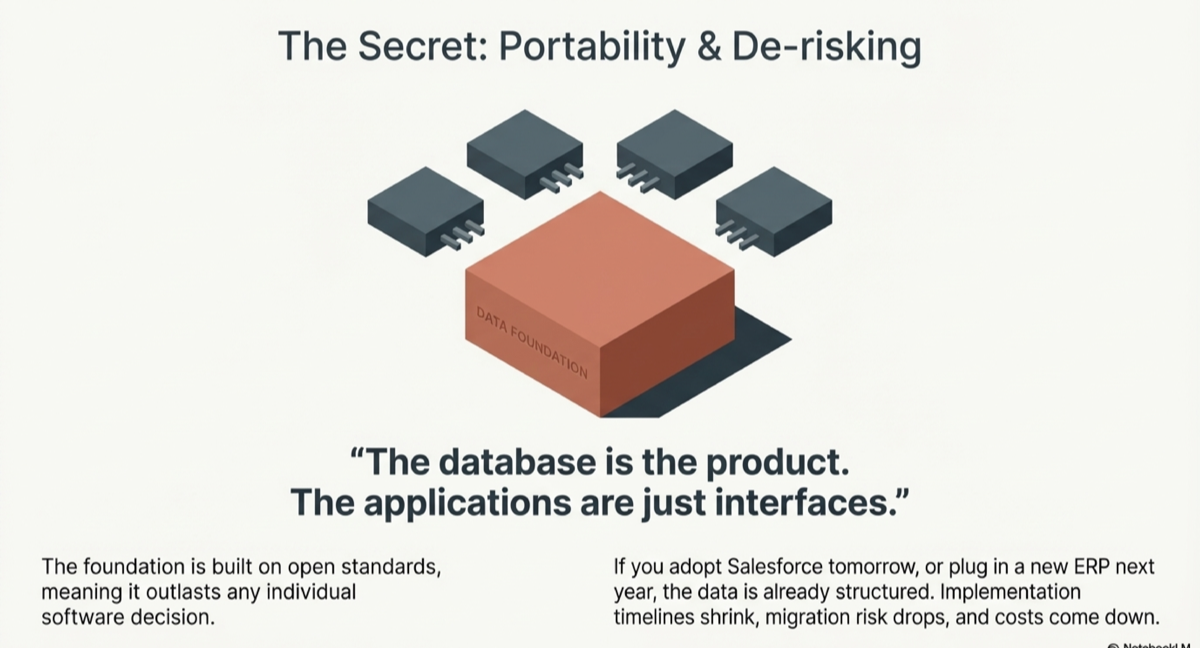
A data foundation built on open standards is vendor-independent. If you decide to switch from HubSpot to Salesforce, the data layer does not change. If you want to add a new analytics tool, the data is already clean and ready. This portability is not a technical nicety — it is a strategic asset that reduces lock-in, lowers switching costs, and gives you leverage in every vendor negotiation. Experian found that 95% of organisations experience negative business impact from poor data quality2 — a vendor-independent foundation protects you from this.
The Right Question to Ask
Before any technology investment, ask: is the data underneath this tool structured, connected, and reliable? If yes, the tool will deliver value. If no, fix the foundation first. It is a simple heuristic, but it will save you hundreds of thousands of dollars in failed implementations and wasted licenses.
Sources
- Gartner, "How to Improve Your Data Quality" (2021)
- Experian, "Global Data Management Research" (2019)
Related Capabilities
Data Strategy & Architecture
Before any technology investment, the architecture and governance must be right. We define data strategy aligned to commercial objectives — the roadmap, standards, and operating model that turn raw data into a durable competitive asset.
Infrastructure & Database Modernisation
Legacy systems and fragmented databases slow everything down. We modernise your data infrastructure — warehousing, pipelines, and platforms — to eliminate silos, reduce cost, and establish the single source of truth your organisation can scale on.
Continue Reading
The Foundation
What Is a Data Foundation (And Why It Matters)
A data foundation is the structured, connected data layer that powers every reliable decision, dashboard, and AI capability in your business. Learn what it is and why it is the most important investment you can make.
Read →The Problem
Why Software Doesn't Fix a Data Problem
The instinct when reporting breaks is to buy a new CRM, BI tool, or AI product. But software doesn't fix a data problem — it just gives you a prettier window into the same mess.
Read →The Outcome
The Compounding Returns of Clean Data
Clean data is accretive in almost every aspect of your organisation. From faster decisions to AI readiness to increased valuation — the returns compound over time.
Read →Ready to build your data foundation?
Let's have a conversation about where you are and whether data foundations are the right investment right now.
Start a Conversation